



Intro
A while ago I set out to build a solar lamp that can work all the time, especially in the dark winter months. Using real solar production data and a simple excel model, I was able to figure out combinations of battery and solar cells that would be able to power the LED in a SOLVINDEN lamp through the dark winter months. But in my laziness, i never ended up building it. Until I realized….
It was under my nose
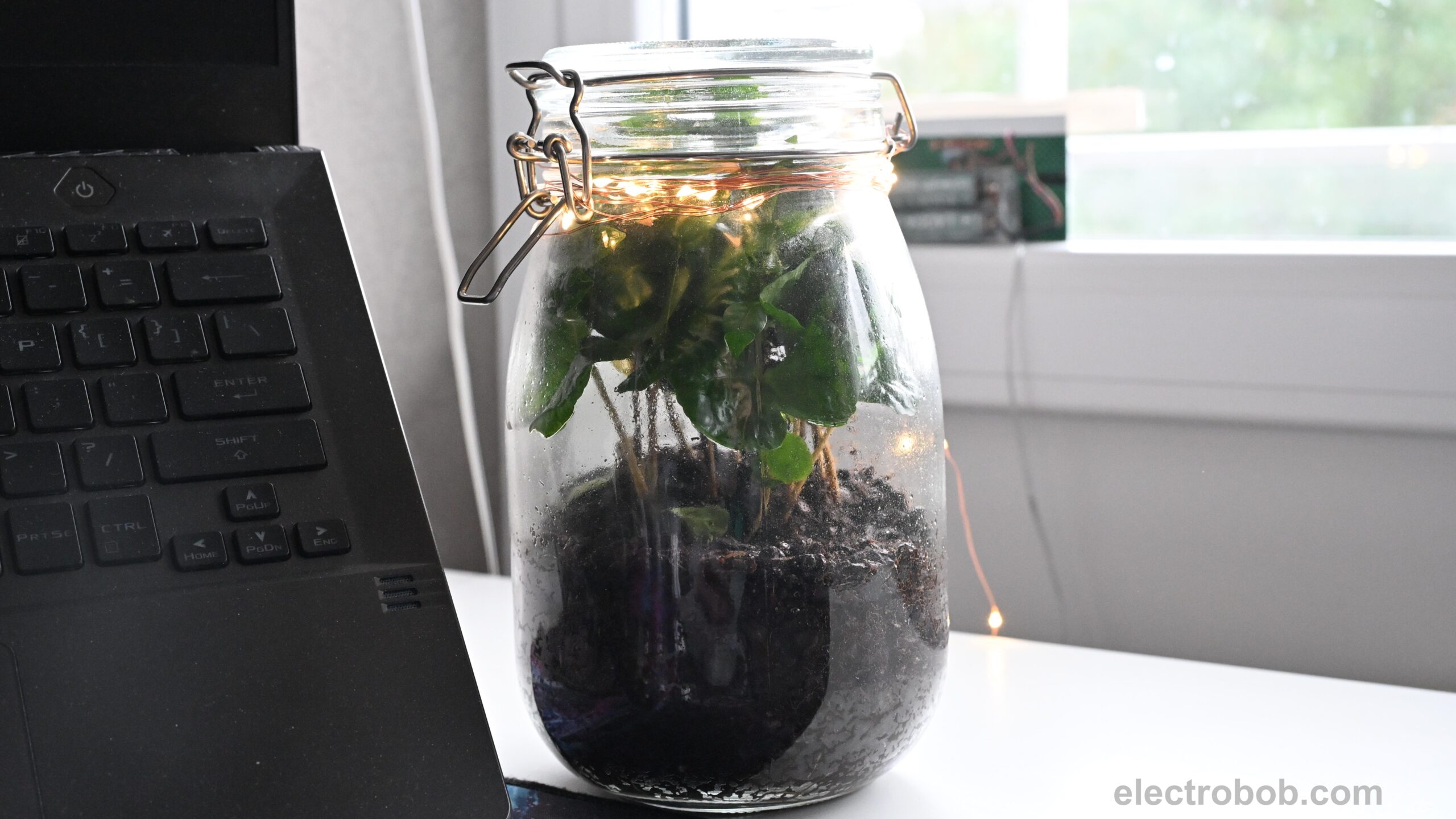
For a couple of years already this small terrarium with a coffee plant has been improving the Hygge of my home office. And what do you see on top of the jar? It’s a string of rice LED lights. But look carefully to the background and you can see that the batteries are actually sitting behind a solar panel glued to my window. This has passed through 2 winters when there was always some light coming from the LED string.
By the way, if you want an always available, at home, Petrichor in a jar, then this is it. The smell inside the jar is amazing.
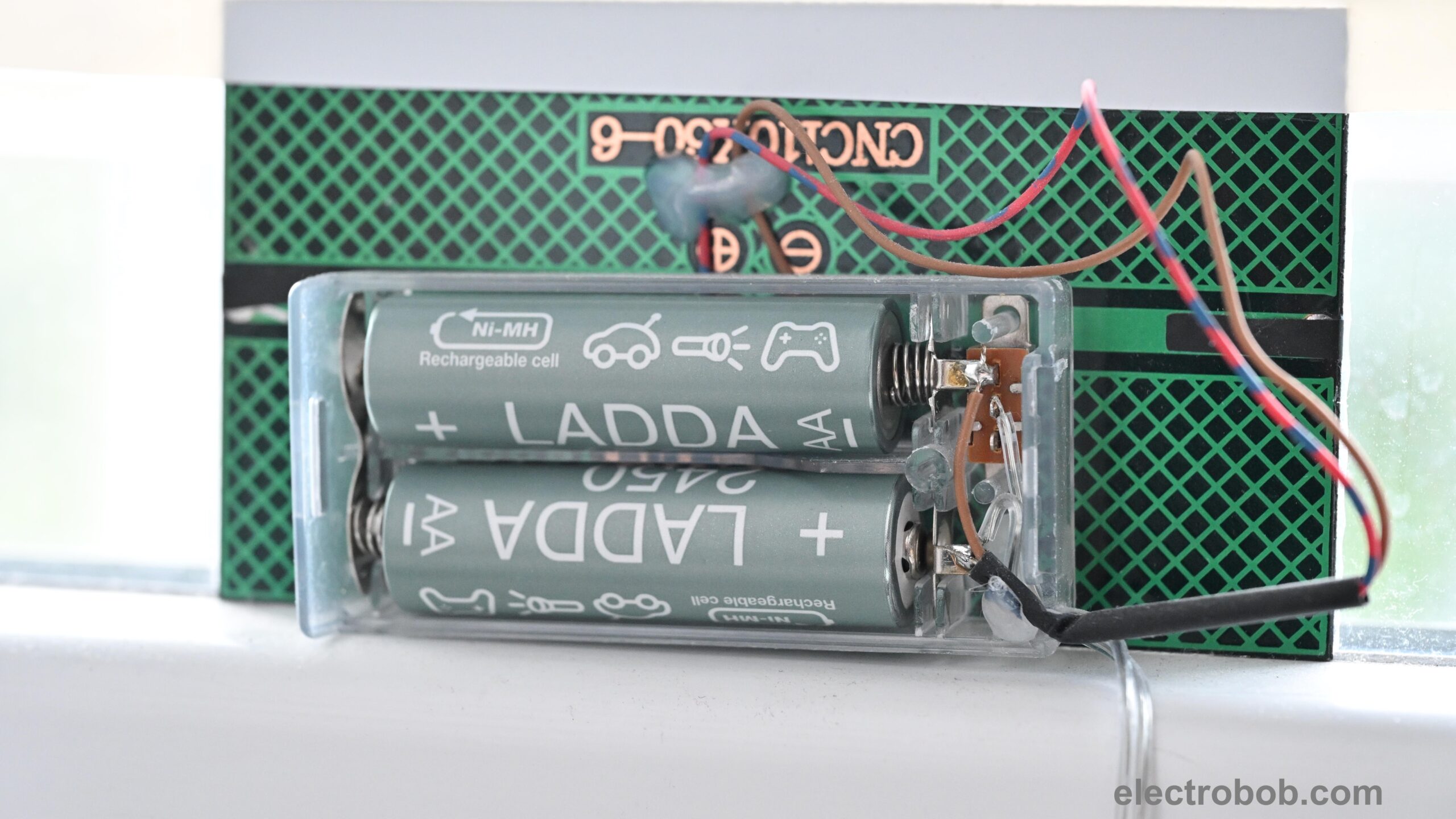
The string originally is powered from a pair of AA batteries and there is no current limiting resistor. The solar panel is officially 6V/167mA, but i measured only 131mA in best orientation and full summer day. Still, this is enough to keep the NiMH batteries topped up even if the panel is not getting full sun that much, as it is stuck to a west facing window. NiMH batteries can tolerate being charged indefinitely at such low currents, so there is no need for any charging circuitry to limit the process when batteries are full. The charging is done through a 1N4148 diode hidden in the black tube.
It’s been 2 winters and the LEDs have remained always on, though some periods they are a lot dimmer.
Why does it work?
The secret behind this is the combination between the voltage required for the LEDs and the voltage on the batteries. If you ever played with strings of LEDs powered from TWO (and not 3) batteries, you will notice that the LEDs just get dimmer and dimmer as the battery discharges, but even weeks or months can go by and they don’t fully die. This is because as the batteries discharge, the LEDs draw less current, so the batteries discharge less and so on.
To demonstrate this, here is a plot of the current in each of the LEDs versus the applied voltage ranging from 2V (discharged alkaline/NiMH) to 3.2V (new alkaline). I’ve measured it for the string of rice LEDs on the coffee terrarium, two other LED strings i have, the LED in the SOLVINDEN lamp and three other white LEDs from my drawer. Note, the current is per LED even in the strings.

What you can see in the data is that there is no current in the LEDs up to 2.4V, and from 2.5V onwards the current increases fast, like the typical diode behaviour. So, there is no current in the LEDs when the NiMH is almost completely discharged (2.4V, low current) and there is a lot of current in the LEDs when the NiMH batteries are full (2.9V). This severe drop of current as the batteries get more discharged results in a “long tail” of discharge, meaning there is a lot of battery running time
Outro
Ok, this is not perfectly matching what I wanted in the first part, which was a solar lamp that always works and has constant brightness. But, it is a solar lamp that always works. So stay tuned for part 3 of the series.